

Economic Technologies
Research can relieve a shortage, unlock another production method or help a mature colony do more with its people. Choose the benefit that addresses your economy's actual constraint.
Buildings in this chapter
 Building referenceMedium Housing Construction and upkeep
 Building referenceSolar Power Array Construction and upkeep
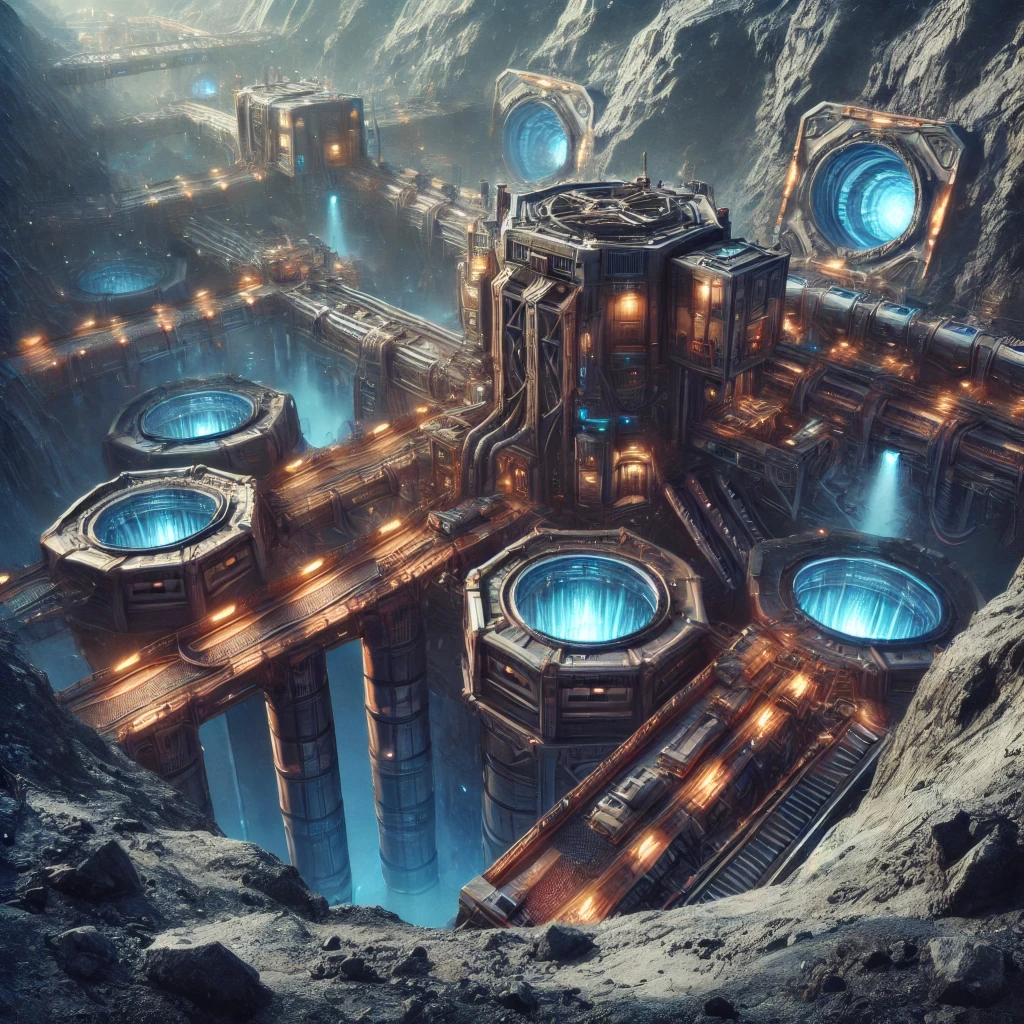 Building referenceCore Mine Construction and upkeep
 Building referenceAsteroid Mine Construction and upkeep
 Building referenceFactory Construction and upkeep
 Building referenceStarport Construction and upkeep
Read the benefit before choosing the branch
An economic technology can change very different things. A blueprint unlock lets you construct a new building or ship, while an output improvement increases what operating assets produce. A cost reduction changes the resources needed for a project or a running facility. More housing supports a larger population, and industrial automation reduces the workers needed by particular workplaces. These benefits solve different problems even when they sit near one another in the research tree.
Open the technology's Benefits and Research requirements before selecting it. A visible technology may still need more prerequisite progress before you can research it, and a completed blueprint does not construct its building for you. The Buildings and Ships references show what you will need to fund and operate afterward.
Choose an answer to your current bottleneck
For weak extraction, look at Mining and the Resource Ascendancy path. Deep Core Mining improves extraction but does not itself unlock the Core Mine building; Continental Power Exchange provides that blueprint. Asteroid Mining unlocks the Orbital Miner ship, whereas Asteroid Claim Engineering unlocks the Asteroid Mine building. The similar names describe different ways to expand production.
For power shortages, Energy offers better generation, demand reductions, storage and local grid controls. Energy Storage makes surplus power useful later, Advanced Solar opens the Solar Power Array, and later developments enable larger generators and energy conversion. Energy Distribution and Wireless Energy Distribution improve a local grid; they do not turn electricity into an empire-wide resource.
When facilities lack staff, housing, population support and Industrial Robotics can be more useful than another output bonus. Industrial Robotics lowers industrial workforce demand and also improves civilian logistics. Frontier Housing Standards opens Medium Housing; population and migration technologies help growing colonies reach the people and housing they need. Those benefits still require suitable local conditions and active infrastructure.
Improve a functioning chain before adding complexity
Production and industrial research can improve construction or shipbuilding throughput, but extra capacity still needs project funding. Fuel research can reduce running costs and support fleet operations; it does not remove the need for refineries. Expansion and Terraforming research can lower administration and help remote or difficult colonies become productive. Compare the entire chain, not just the largest percentage in a tooltip.
Terraforming also gives you projects to carry out on owned worlds after the required research. Improving habitability helps growth and construction; better habitability and atmosphere support ordinary building output. Resource Enrichment improves common- and rare-mineral deposits. These are deliberate investments with an upfront credit and strategic-material bill, so compare improving an established world with developing another source. The Star systems guide explains the individual projects and their requirements.
A blueprint can be powerful and premature. Before investing in a Core Mine, prepare the colony that will meet its population requirement, staff it and supply its power. Before expanding Trade Convoys, prepare completed Starports and useful destinations. If your current buildings are idle, a research benefit that restores their use may pay off sooner than unlocking an expensive new facility.
Plan a research programme you can finish
The Technology map is useful for tracing requirements; the Technology encyclopedia explains benefits and lets you compare entries. Research paths are suggestions you can combine, not exclusive classes. Follow a promising unlock back through its requirements, then set branch priorities that match your research goals and material income. Available technologies within a branch share its allocation.
Keep a practical follow-through in mind: know which colony will use the unlock and which resources you need to save. Completing a technology just as the treasury empties can leave its new building unavailable in practice. A smaller, funded improvement that you can use immediately is often a better next step.
Advanced details
Open the calculations and current reference values when you want to plan more precisely. Production figures assume the stated conditions; your colony and technology bonuses can change the result.
Different kinds of economic modifier
Construction cost modifiers affect the price of new work; operating consumption modifiers affect recurring inputs. Output modifiers and abundance modifiers are separate factors for mined resources. Industrial workforce reduction affects the listed industrial workplaces rather than every job in the colony.
Completed technologies contribute their stated effects to the empire's current bonuses. Exact limits and recipe changes depend on the mechanic: use the technology's own Advanced details and the relevant resource chapter rather than applying one percentage to every economic value.
Terraforming investments
Ordinary terraforming projects take their listed credits and strategic materials when the order is placed, unlike the incremental cost of a building queue. Resource Enrichment costs 12,000,000 credits and 1,200,000 strategic materials and has a base duration of 24,000 ticks. On completion it adds 10 common-abundance points and 5 rare-abundance points within the accumulated improvement limits.
Planetary Genesis is a separate late project with an upfront bill and funded operating requirements. During work it needs spare local power, production capacity, available workers and fuel. That local allocation takes precedence over a Matter Converter. Project availability and work improvements depend on completed research; consult Star systems for those conditions.
Important current limits
Industrial workforce demand is clamped between 50% and 100% of the base crew requirement, rounded up per facility. Nonindustrial buildings retain their normal worker demand. Construction and ship-production work speed uses a square-root capacity curve and is capped at 3 before the shared 0.5 work-rate factor.
Headquarters resource output is a special bootstrap supply: its pooled-resource output does not receive ordinary abundance or resource-production bonuses. Technology can therefore make specialized production more valuable without multiplying the Headquarters' starting resource package.
Industrial workers per facility = ceil(base crew × clamp(workforce multiplier, 0.5, 1))Work-speed factor = min(3, sqrt(effective capacity ÷ reference capacity) × technology multiplier)