
Population growth and capacity
Your residents staff buildings and serve as troops. Give a colony enough homes, good living conditions, and useful work so it can grow and support your empire.
Every colony has room for 100 residents before housing is added. Enabled housing and housing research increase that room; damage reduces what buildings provide.
Spare housing and civic services help residents stay happy. Crowding and heavy troop recruitment can make them less happy, and recovery takes time.
Happier, more habitable colonies grow more easily. Small gains and losses accumulate across ticks, while serious crowding or unhappiness can cause decline.
Passenger capacity helps residents move between your colonies. Travellers leave their old colony first and join the destination after the journey.
Help the colony grow
Empty homes make room for growth, while happiness and habitability help the colony attract and sustain more residents. Research and growth-supporting buildings can improve the rate.
Industry needs workers each tick, but staffing a mine or factory does not remove those people from the population. When too many buildings compete for too few workers, most buildings operate below their full output.
Small births and deaths are carried forward between ticks. A population total can stay unchanged for a tick even while the colony is gradually growing or declining.
Keep a colony growing
- Watch the trend.The Empire tab shows each system's population change from its latest tick and warns when it is dwindling.
- Build ahead.Add housing before homes become crowded.
- Keep services running.Housing and civic services need workers and supplies to deliver their operating benefits.
- Staff your industry.Mines, refineries, shipyards, and intelligence facilities need workers. Disable lower-priority buildings when there are too few people to staff them all.
- Plan for arrivals.Provide spare housing and passenger capacity to welcome settlers. Starports increase how many people can travel.
- Support happiness.Happiness buildings and technologies sustain growth when a dense colony becomes crowded.
- Improve harsh worlds.Terraforming raises habitability, helping a colony's population grow and making major development proceed more smoothly.
- Protect civilian labor.Troop allocation does not remove population, but it reduces the workforce available for production.
Move people where the opportunity is
People can move automatically between your colonies. Housing provides basic passenger capacity, and Starports expand it. Settlers seek another owned colony with at least 70% happiness, available housing, and passenger capacity.
A colony keeps enough residents for its active buildings and troops before anyone leaves. Overcrowding or unhappiness increases the number willing to travel; healthier colonies can also send a smaller flow of settlers.
Migration takes time and uses credits and fuel. Travellers leave the source immediately and arrive at least six ticks later. Departures wait when fares would use resources reserved for essential operations.
Advanced details
A source keeps at least 50 residents, or enough for its active building workforce and troops, whichever is greater. Passenger allowances accumulate across ticks; crowded or unhappy sources build up a larger allowance.
Basic and Medium Housing each add 1 passenger-capacity unit; Advanced Housing adds 5. Each Starport adds 20 and increases the housing contribution by 25%. An Interstellar Trade Mission adds 50. Research can increase this capacity.
At most one twenty-fourth of a source's passenger capacity is added to its travel allowance each tick, also limited by its population. An accumulated allowance is not a promise of an immediate departure: source reserves, destination room, passenger capacity, and the fare must all permit the journey.
max(6, distance ÷ 10,000 rounded up) ticks2 credits + 0.1 fuel × journey ticksBuildings that shape population
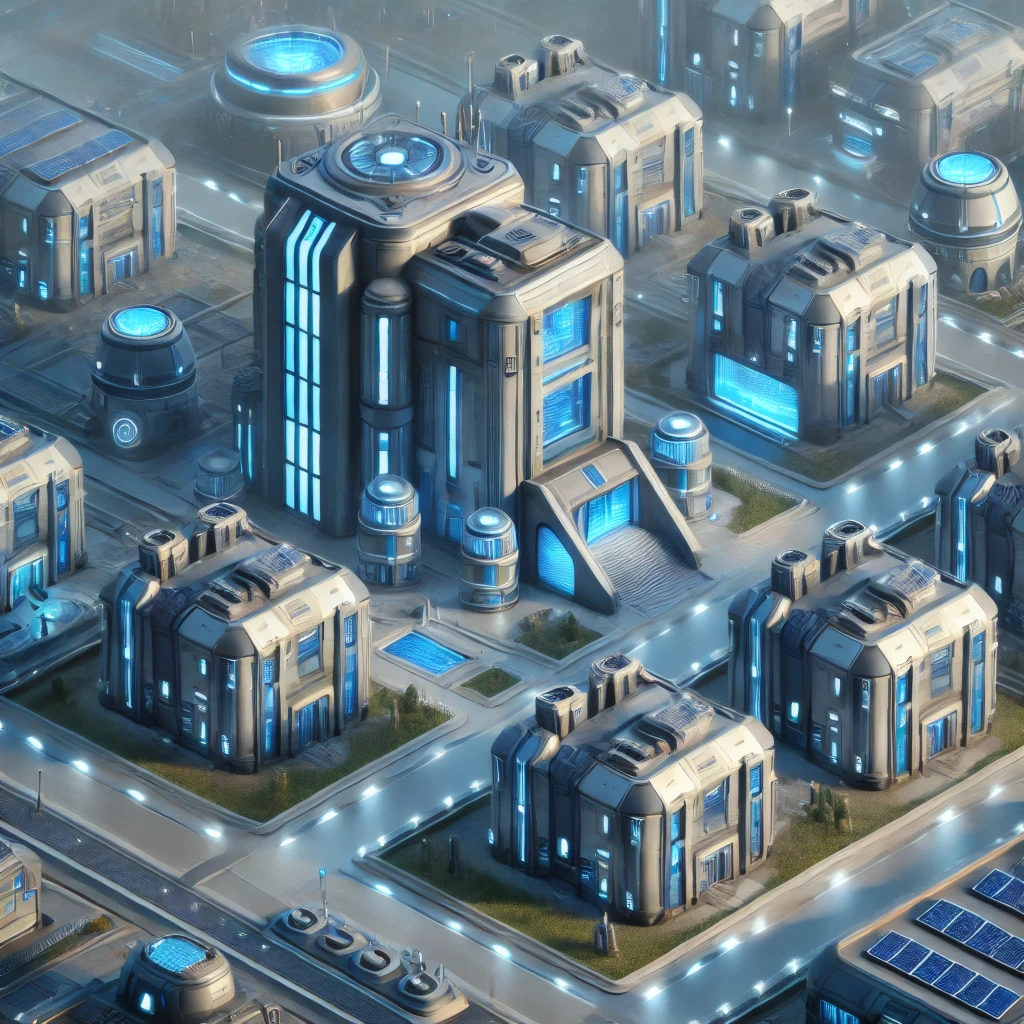 Basic HousingRequired for population growth and provides local passenger capacity even without a Starport.
 Medium HousingHigher-density housing that expands population capacity.
 Advanced HousingArcology-scale housing for a massive population with integrated passenger processing.
 BiosphereCreates a protected living environment that supports population, research, and local resilience.
 Radiation ShieldProtects inhabitants from environmental radiation and supports population growth.
 StarportConnects trade and migration routes, adds 20 passenger capacity, and increases housing migration capacity by 25% per Starport.
 Interstellar Trade MissionA major treaty port coordinating customs, credit clearing, freight, passenger migration, diplomatic traffic, and joint research delegations.
Population technologies
Advanced details
Housing capacity includes enabled buildings and their condition. Ordinary births and deaths retain their fractional remainder for later ticks. While a Headquarters colony has fewer than 1,500 residents and spare housing, its separate settlement bonus adds 1 to 5 people per tick without exceeding either limit.
Staffing is the share of required jobs covered by residents who are not serving as troops. For example, 800 available workers covering 1,000 required jobs limits most buildings to 80% staffing before other shortages. Headquarters does not need this ordinary workforce allocation.
100 + usable housing × housing research multiplier, rounded downmax(0, population − serving troops)births − deaths + arriving settlers − departing settlers